Acoustics 101

VoiceBunny Webinar: Acoustics 101
Acoustics is the science in charge of studying the whereabouts of sound waves and how they behave in different situations. It's important to know about acoustics when choosing the space you're going to record in, as every room has it's own frequency response and characteristics which will impact how your voice sounds.
Knowing about acoustics will allow you to know what you need to keep in mind when choosing a space to record in and how to treat the one you already have.
Let's check some basic terms.
- Absorption: It's the capacity of a material to convert sound energy to heat, therefore reducing the amount of the sound that gets reflected.
- Diffusion: Contrary to absorption, it's the scattering reflection of a sound bouncing off a surface. The direction of the wave usually changes so the sound feels as it's coming from various sources at similar levels. It helps to control the energy and to spread the soundwave.
- Reflection: It's the amount of sound energy that it's reflected off a surface. All materials have a grade of reflection. Some materials are more reflective than others.
- Masking: When the volume of a specific frequency is increased due to the presence of another sound or frequency. This is most commonly presented with low frequencies, where a very low frequency is boosted by the environments resonance.
- Boominess: Low-frequency reflections that give the impression of a space being too small or made of very absorptive materials.
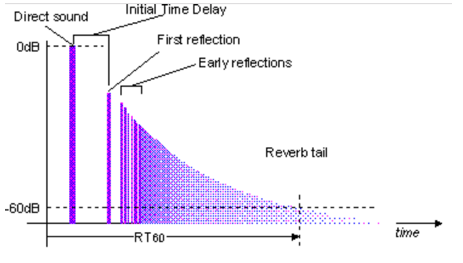
- Early reflections: First and second reflections that arrive at the listener after bouncing once or twice in the space. They are very important for listeners to understand the size and characteristics of a room.
- Room echo: the reflections (delay and reverb) of a specific space that dampens the direct signal of a sound. This is how a sound behaves inside a room and gives it it’s tone and character.
- Background noise: All the sounds coming from sources different than the direct signal pretended to be recorded. This is considered undesired noise, so it could be people talking in the background, passing cars, birds, AC, among others.
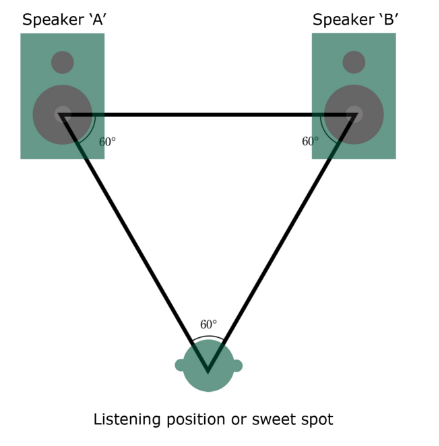
- Sweet spot: It's the best spot where the focus of the speakers is located and where the recording will be faithfully reproduced as intended in the mix. It can be found by calculating an equilateral triangle at 60º angles. This is the place where the speakers and listener will be able to listen to the mix as faithfully as possible, in terms of stereo image and frequencies.
Reverb vs Delay
These two concepts can get a little bit confused between each other.
Reverberation is the sound's persistence in a space until a signal dies out. It's all the remaining sound from a wave that is just circulating and persisting in a space, constantly reflecting off the surfaces. Reverb is very important, not only because it allows you to understand the characteristics and size of a space, but also because it really affects the intelligibility of the sound. Reverberation is going to vary taking into account the size or the space you're in. If you're in a church, for example, and you're talking inside the voice is going to be so damp that it can get very hard to understand what the other person’s saying. If you're in a small room, the sound is going to bounce less and, therefore, the signal will remain for less time in the space making it easier for you to understand and listen to the direct signal.
Delay is the reflected sound producing an intelligible repetition of the original sound. It will not impact how intelligible the direct signal will be, but it will add a new repetition that you can identify. There are different types of delay which are determined by the time between the direct signal and the reflection. Echo is a form of a delay where the reflection will come 60 milliseconds after the direct sound is emitted. This is enough time for your brain to recognize this sound as a different signal. Given the intensity, it gives the impression of having two direct signals when it's still just one that is being reproduced by the space.
In summary, the main difference between delay and reverb is that delay is and intelligible repetition of a sound and reverberation is the persistence of the sound in a space after bouncing off the surfaces until it dies out.
Listening exercise
We did a listening exercise during this session. You can listen to the files we presented in the following folder: https://goo.gl/mOf1v4
We recorded different examples of the most common problems we have found in VoiceBunny’s deliverables so you can get familiarized with them.
Acoustic Materials
Absorption
Absorptive materials turn the sound energy and pressure into heat, avoiding it from bouncing everywhere. These are most effective for high frequencies although they can be specifically designed for different frequency ranges. They vary in size and shape depending on its application. We can find bass traps which are designed to absorb low-frequencies specifically. Low frequencies tend to be boosted in the corners of the rooms, so bass traps are usually triangle-shaped and designed for corners.
Here are some examples of absorptive materials you can find in the market::
- Acoustic Fiberglass: Lightweight and versatile. It can be cut in several sizes and it's easy to manipulate. It's somewhat more expensive than other materials but it's very good for certain applications. It can be located in several places inside a room due to it being highly customizable.
- Acoustic Foam: Absorbs multi-frequency noises. It's affordable and easy to get. It’s the most common acoustic material you find in the market. It comes in various shapes and sizes so there's no need to cut it after purchasing unless you really need it.
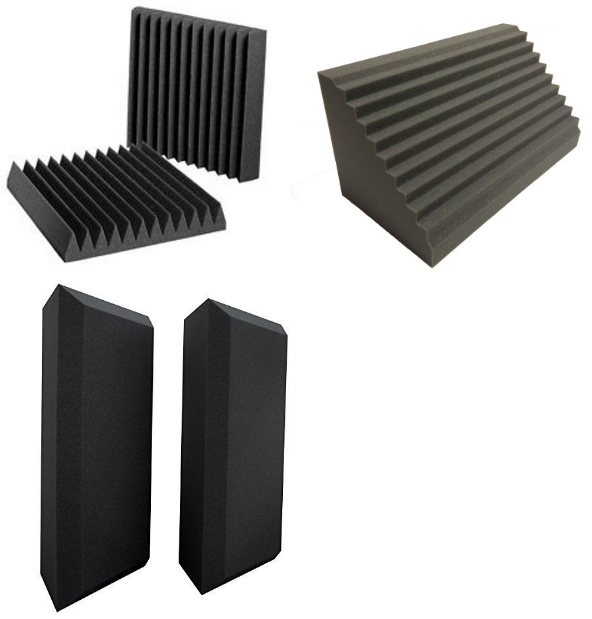
Examples of acoustic foams and bass traps.
- Acoustic Cotton: It's not that common or easy to find but it's an eco-friendly option. It's made of recyclable acoustic cotton and natural fibers made of fungi and mold. It's very durable and a nice option if you are also into helping the environment.
- Hanging Baffles: They're usually found in theaters and come in various presentations. They're designed for big spaces due to their sizes. They have to be hanged from the ceiling so they require tall spaces.
Diffusion
Diffusion helps to control the energy of a wave and improves the sound quality in frequencies throughout the middle and high range of the spectrum. Diffusive materials come in various shapes and sizes, depending on the frequencies they are meant to treat. They're also commonly made of wood or plastic as they're easy to craft. These materials help even out a spaces frequency response to make it sound more natural to the ear. They can be custom made depending on the issue you have but you can also find some premade panels that are very useful as well. The advantage of these materials is that they will allow you to have more control over the frequencies in your recording or mixing booths. Diffusive materials are more commonly found in mixing and mastering rooms.
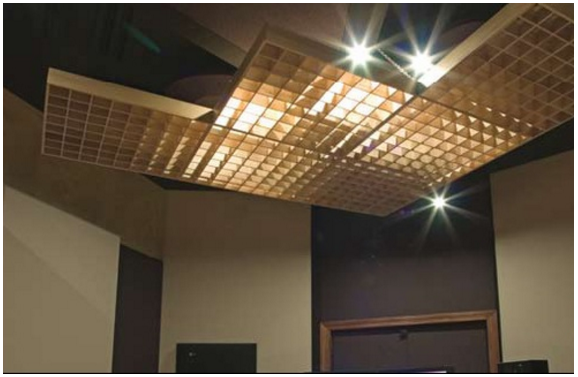 Example of a diffusor in a mixing room.
Recommend Practices
These are things we've tried from experience and have worked for us. You can find more tips and tricks online.
- Inspect the room where you'll be recording, identify the materials the room is made of and also its size and shape.
- Foresee how the sound will behave and be creative on how you can manipulate the energy with the objects you have at hand.
- It's important to experiment! Install different objects and try out different materials. You’ll find out the best treatment for your space through practice and testing so don’t be afraid to try out new settings.
- Take your time to improve the studio, do it little by little.
- Get used to your space: this will allow you to know it well in order to get the best out of it.
Vocal Booths
Specific for vocal recording, these are good options for you to achieve great recordings if you don't have the opportunity to treat your space (i.e. you live in a small one bedroom apartment or share a flat).
There are different types of vocal booths. These can be used both in a studio or in untreated spaces but are more commonly used in the later. They help reduce the reflections from the back and the sides of the microphone. These devices will allow you to capture only what you need to while rejecting all that extra noise. Vocal booths are a great choice when you can't treat your space immediately, and you can also mix different vocal booths for better absorption and results.
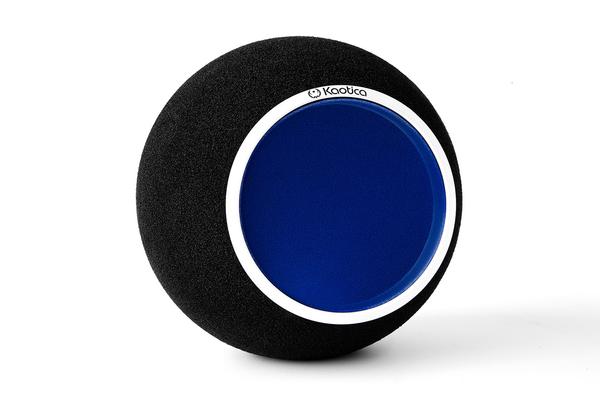
Kaotica Eyeball: It's portable and small. The foam used for it is very high quality and comes with a pop filter in the front. This pop filter is not the best, but it gives good results if you don’t have another one. It may make your recordings to sound quite opaque, but this also depends on both the type of voice you have and the microphone that you use. If you plan to get this device, we suggest you try different mics that have a particular boost on the high-mid frequency range to make the sound to balance out. If you know how to use processing, you can also try applying some mild EQ to cut the low frequency boost.
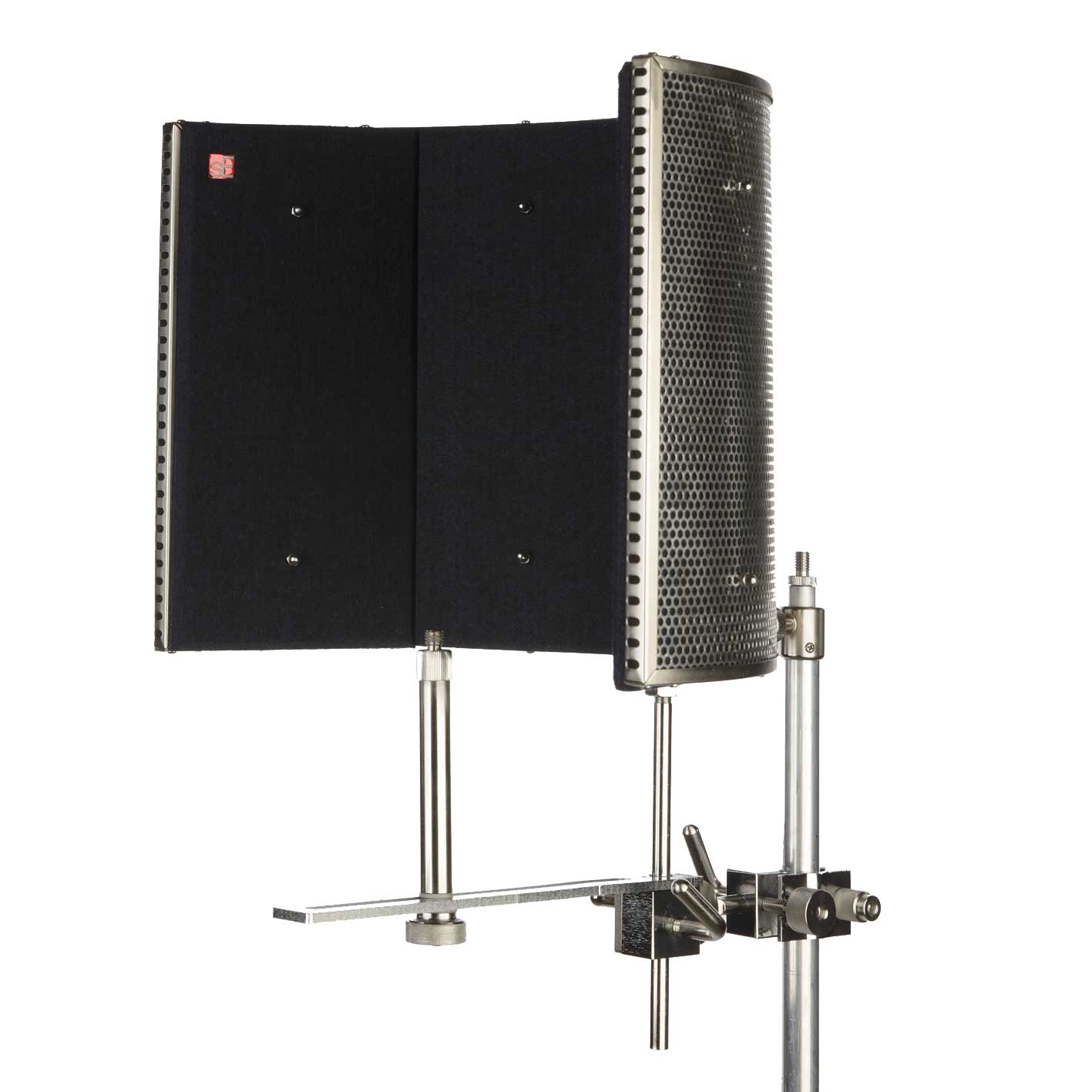
sE Electronics Reflection Filter Pro: It's made of foam and the back panel is made of metal making it sturdy and durable. The height is adjustable so you can place the mic as far or near from the booth as you want. You can use it by itself and it gives very good results with very directional microphones. You can also use it in combination with the Kaotica Eyeball to give it a bit more absorption and isolation.
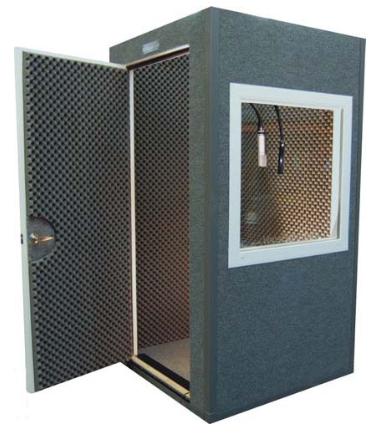
You can also find more professional vocal booths too. These look like phone booths and are made of absorbing materials inside out. They are, basically, a box you instal inside your house so they are not portable. However, these are the to go option if you have a stable space where you'll be recording always. Needless to say, getting one of these is way cheaper than treating a full room and is a great solution if you’re only going to be recording voices.
Q&A
How do we fix boxiness? More foam?
No, the issue with boxiness is the other way around. Every part of the sound that is not from the direct signal is getting absorbed. This is actually tricky and can get quite complicated to treat when you have boxiness, but adding more foam may be counterproductive because if there's boxiness, you're already absorbing more frequencies that you'd like to, and removing a lot of space that you want to give the recording. Whenever you have very absorbing spaces, that is also not ideal. We want to absorb some of the things but you need to have a balance so the recording sounds natural.
The problem is also about size and frequency so you can try changing the shape if it's a square box or give it a bit more air so the sound can travel and loose energy in the space. Knowing your space will let you see it's not always about diffusing or absorbing completely, but finding that balance to achieve a natural sound.
What characterizes the sweet spot?
This is not very easy to understand at first when you start moving around looking for it. If you don't know well how it should sound, it'll be a bit complicated to find it and feel how it should sound. However, this spot is important to know when you have studio speakers. It will depend on the speakers you're using and the space as well, sometimes the space it's going to take it further away if you have several freq. bouncing around. What characterizes it is that you can listen to the mix or audio and you find it rich. The stereo image is very clear and you know for sure what's on each of the sides.
Please sign in to leave a comment.
Hello, I am trying to find the article where you were comparing some recording equipments. Canyou send me the link please ? Thanks