How Can We #PressForProgress?

In honor of International Women’s Day, Angela Serrano, Bunny Pro Senior Associate, and Maika Hoekman, Head of Torre Social, have decided to sit down with some of VoiceBunny’s experienced female voiceover artists to take a tough look at gender equality in the VoiceBunny community. Hoekman and Serrano have a candid discussion with VoiceBunny Pros Katie Gaskin, Ripley Johnson, and Kira Buckland about what our company is doing to press for progress and close the gender gap. The gap is slowly closing but at the rate it’s moving, equality is still hundreds of years away. We can’t wait that long.
You can keep reading our recap or you can watch the full video in our YouTube Channel.
By the Numbers
While we all agree that gender discrimination and bias exist in the voiceover community, we are all surprised at how prevalent it is within Bunny Inc.’s stable of freelance professionals. According to the Bunny Inc.’s employee data, 70% of VoiceBunny Pro’s are male, while only 29% are female. Additionally, 58% of VoiceBunny projects are completed by male artists, while 42% are completed by female artists.
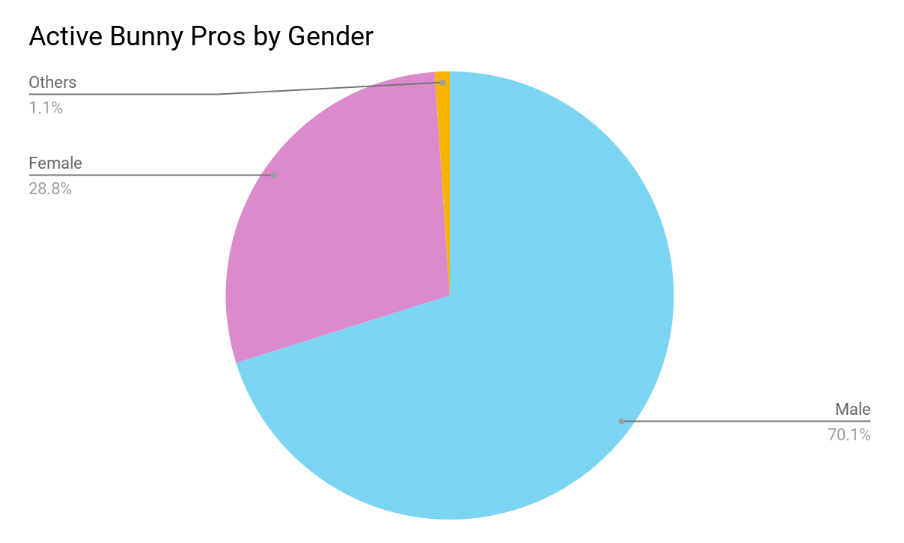
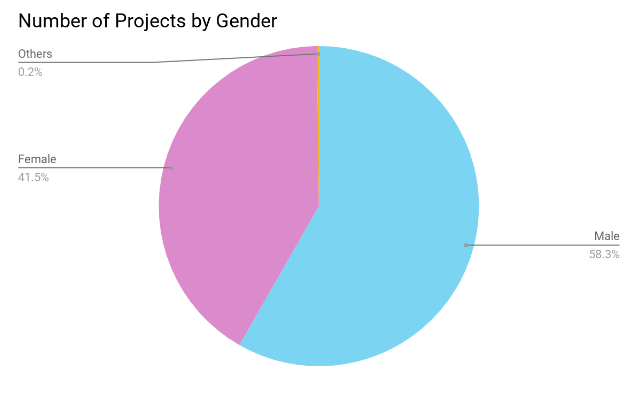
We are surprised at this disparity and begin our discussion by examining what might be causing such a gap and how we can all work together to try to remedy this inequity.
What’s the Deal?
While we all note that there seems to be an increase in demand for female voiceover artists in a number of different genres, including video games and instructional explainer videos, there are still plenty of genres that seem to be dominated by male artists. When clients are looking for a voice for their movie trailer, for example, they tend to hire a male voice. While work is readily available for women in the voiceover industry, we are often relegated to maternal roles that ask us to patiently guide the audience through a tough process, or to relax our listeners as they prepare to enter a spa. Where do the assumptions that certain jobs are for men while others are for women come from? Are we contributing at all to these assumptions? In our discussion, we address how we can try to make changes to hopefully change these misconceptions.
Are We Part of the Problem?
We then go on to discuss the importance of identifying where both the artists and administrators make subconscious or unconscious contributions to this clear gender gap. Perhaps clients tend to hire artists who fit traditional gender roles, for example, because female voiceover artists don’t have samples that illustrate their ability to excel in traditionally male roles. A client looking for a voice for her truck commercial is more likely to hire an artist with a truck commercial in his portfolio. If women don’t get these types of jobs, we won’t have samples showing that we are suited for them, and we will continue to get passed over for these types of jobs; the problem is self-fulfilling.
At VoiceBunny, we could be working a little harder, too, to make sure that pros of all genders have an equal chance at work. Ripley points out that on the company’s website, clients must pick a voiceover artist based on gender, and male categories appear first on the website. This is a small detail, but a client who has no gender preference for their job is more likely to click the first category they see, which is male. The only way we are ever going to reach gender equality is if we notice where our biases, both conscious and subconscious, contribute to the gender gap.
Q&A With the Panel
(Q): Theresa was saying that we as voiceover artists could start uploading demos and samples of things like what she just said: a commercial for a truck, a movie trailer for a movie about the civil war, etc…what do you think about that? If we created some scripts for you girls to try it out, would you be willing to record some of those samples?
(A): Samples are just kinda from when clients direct-book me for things or I complete a project, but there are certain [categories] where I just don’t have anything in there because I never get booked for them. We don’t have samples in these categories because we’re never hired for these jobs, but then we’re not hired for these jobs because they can’t find those kinds of samples…
(Q): What kind of advice can you give to female talent who are just starting into the new business…what would you like to share with them?
(A): As women, we’re socialized a lot to want to please people…sometimes making our clients happy leads us to compromising on things like fair rates or being afraid to ask for certain things…as women, we’re like afraid to ask for that or like socially conditioned to make everyone happy and we can’t ask for too much…that kind of thing.
Please sign in to leave a comment.