Microphone 101

Hello there, Community!
Our last webinar was all about microphones: how they work, which types are the best, and basically a good 101 for you all who are interested in learning more of this tool for your work process!
To know more about it, keep reading this post.
Types of Microphones
There are three main types of microphones: condenser, dynamic and ribbon. There are other types as well that you may find in the market but these aren't very common and can be really expensive.
Condenser:
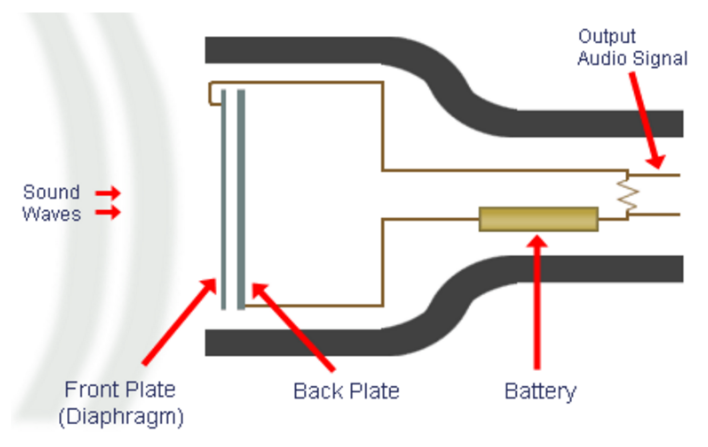
They follow the Capacitor theory and work using capacitors to get the signal and capture the audio. The diaphragm acts as one of the plates of the capacitor while the other one will be inside the microphone. The vibrations from the wind that hit the first plate will produce changes in the distance between plates which will be then translated into the sound that you'll be able to listen to.
- Very sensitive to sounds and have a great transient response.
- Frequency response is usually very good, and are great at capturing high frequencies with accuracy.
- Most common for vocal recordings and used in studio.
- Tend to be expensive, but you can find some at very affordable prices.
- Require an external power source to work. Keep that in mind! You'll need an interface/preamp with Phantom Power (48v).
- Large-diaphragm condenser microphones for vocals are the best option. A bigger diaphragm will allow you to catch a bigger spectrum of your voice.
Dynamic:
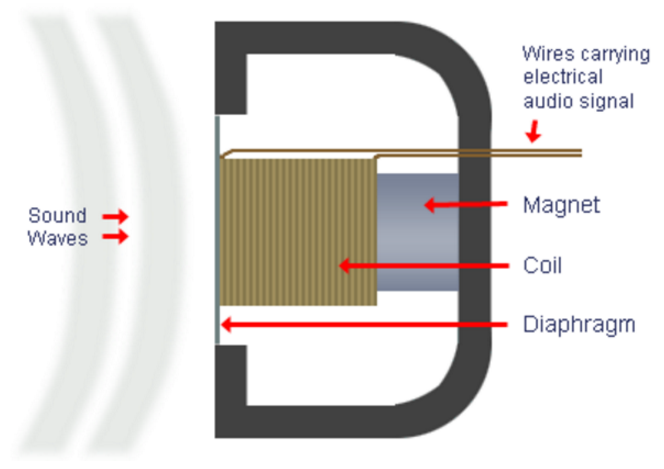
These mics have a movable coil positioned in the magnetic field of a permanent magnet attached to the diaphragm. The diaphragm's vibrations move the coil in the magnetic field, producing a varying current in the coil through electromagnetic induction. Thanks to this, this type of mics can be rougher making them perfect for live performances but less sensitive than condenser mics as well.
- Robust and resistant.
- Mostly used on stage and live performances.
- They have a wide variety of prices and sizes, most of them are pretty affordable.
- Don't require an external power source.
- Very versatile, you can find them for a variety of applications that go from drum kits sets to vocal recordings.
- They withstand high sound pressure levels, making them great for big instruments, or deep voices.
Ribbon:
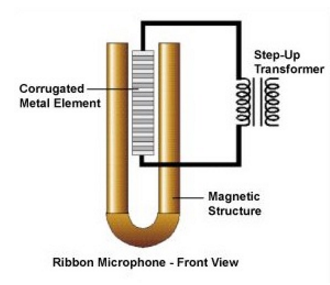
These have a metal ribbon connected to the microphone's output. The vibrations within the magnetic field will generate an electric signal that will be passed to the metallic ribbon in the microphone which will help produce electromagnetic variations so that the audio is captured.
We will not go over these mics as they are not that common and we want to make sure we go in depth with dynamic and condenser mics.
Polar Patterns
“Polar Patterns” refer to the sensitivity to sound relative to the direction or angle from which the sound arrives. Depending on where you're located from the diaphragm of a microphone, it will capture or not the audio that is coming from the source. There are six main patterns:
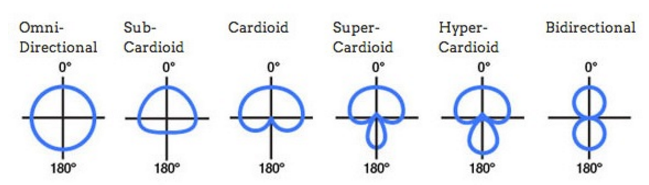
The most common for on stage applications is the omnidirectional pattern. You can stand in any direction towards the microphone and it will capture the sound with the same strength meaning it will be sensitive all around.
Subcardioid mics are not very common, but you can find them as well. The range is a little bit reduced in comparison to the omnidirectional. It’s been reduced around 90º to 270º in comparison to the omnidirectional, meaning that if you stand around 180º from it, it probably won't capture as much sound. However, it will still be able to capture much of the sound around the diaphragm and from the source.
Cardioid mics will capture the front part of the diaphragm and a little bit on the sides. It will cancel everything that is coming from behind the mic. This is very good whenever you're recording vocals because you can reject all of the audio coming from unwanted sources.
Supercardioid mics are going to capture the same information from the cardioid but will add a bit more on the tail on the back of the diaphragm and mic. This is also used sometimes when recording movie dialogs, or when you need to record sounds from the back of the source.
Hypercardioid mics are not as common and,similar to the supercardioid, captures the same space and adds a bit more of reach in the lower part.
Bidirectional or figure-8 microphones, form an “8” around the diaphragm and records the same parts from the front and from the back of the microphone with the same intensity. However, if you stand in the sides, it may not capture anything.
You should keep these definitions and polar patterns in mind whenever you're choosing a microphone. The results will depend on what you want to record and how you want to capture the source so it's really important to know what you're buying. The most common patterns are cardioid, omnidirectional and supercardioid.
USB vs. XLR
USB microphones have a built-in mic preamp and an AD/DA converter all inside.Basically, you’re taking all the components and putting inside one device to avoid the necessity to buy extra pieces of equipment.
XLR refers to the three-pin cable that most microphones require to be plugged into your interface or preamp. This microphone will only work with external equipment and it won't have any components different from the microphone’s usual ones (sometimes they have a pad).You need to have an interface or a preamplifier + AD/DA converter combo for you to be able to use it.
So, why are USB microphones not recommended despite being so cost and space effective? Well, USB mics are usually cheap, way cheaper than most XLR mics resulting in having lower quality components to match the price they go for. Lower quality components usually result in a higher noise floor compared to having every piece separated. So, even though the capsule may be the same as their XLR counterpart, this mic makes way more processes inside which can reduce the overall sound quality and performance a lot.
Some brands have the same reference for USB and XLR mics, like the Audiotechnica AT2020 or the Blue Spark, however, we recommend you to get the XLR versions and mix them with good interfaces and preamplifiers. The results will be much better that way for professional voice over recordings.
There are interfaces for all types of budgets. You can check out our personal recommendations here: https://help.bunnyinc.com/hc/en-us/community/posts/203362904-Tip-4-Choose-a-good-interface-for-your-needs-
However, USB mics have other uses where they would work really well, like Podcasts or radio applications as you may won't need that high-quality audio, or perfectly clean final recordings. For voice over recordings used for commercial purposes, videos or audiobooks, you need a very clean audio recording that will require the best quality right off the bat with little to no post production.
Our Top Picks!
We asked some of our teammates from QC (who listen to your recordings all the time) about their favorite choices for mics. They're not presented in any specific order! The info in regards to pricing as well as specs was taken from Sweetwater. They have great deals and are a very reliable store. You may want to check them out if you want to buy new gear.
- Blue Bluebird
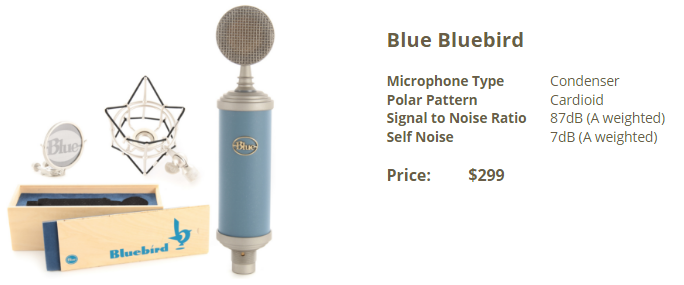
Besides looking great and appealing, as it happens with Blue mics, it has a great response for bright voices, It has a Cardioid polar pattern, perfect for vocals as it was designed for this purpose. It also works for other types of voices, if you don't want to sound very deep or for your low frequencies to be very boosted.
- ElectroVoice RE20
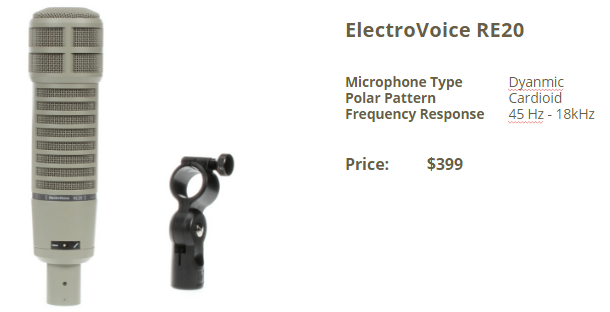
This mic is very popular, delivers great performance and you can use it onstage and in studio as it's a dynamic microphone. It's designed to record vocals, one of the top pics for this purpose. It's great for deep voices, it can withstand high pressure levels, and has a great frequency response too. It's affordable too, and it's a great choice whenever you travel and want to take your equipment with you.
- Neumann U87
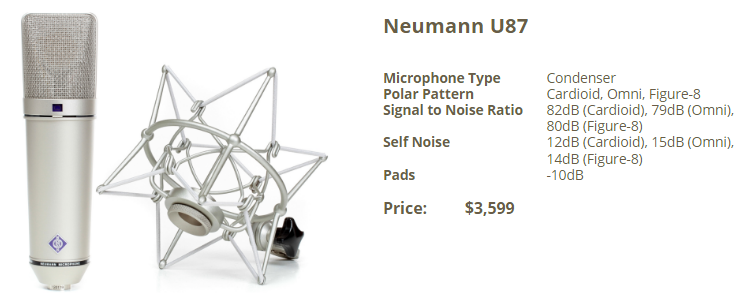
A constant choice from professionals and studios around the world. This is also a condenser microphone and it is a multipattern mic. It doesn't have just one polar pattern, you can choose from different ones depending on what you want to record. This makes it really versatile. It's also very sensitive, you can whisper and it will record it perfectly. This microphone is a little bit expensive, but it's a great buy if you manage to get one! It includes the shock mount in this price.
- Neumann TLM103
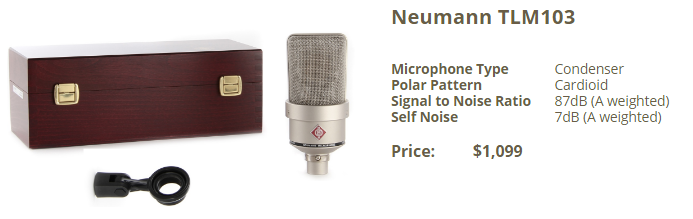
This one is larger than the U87 and has only one pattern, as it was designed specifically for vocals. Delivers great results and it's one of my favorites, personally speaking! I've used it throughout my career in several recordings. It gives great results for high voices, body and depth too and will make your voice really rich and nice. It's a bit delicate, not quite as robust so you must handle it with care and give it a good treatment.
- AKG C414 XLII
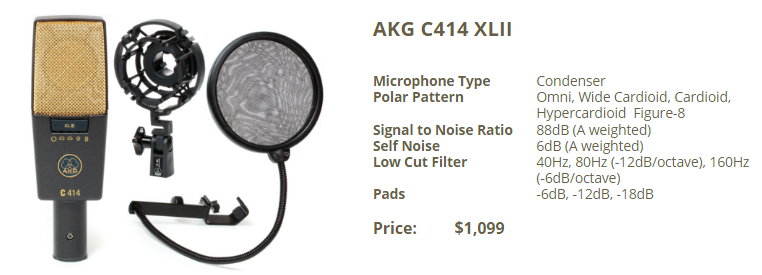
A very versatile mic, has a lot of uses in the studio world, not just for voice overs but instruments as well. it's a condenser microphone as well and a multi-pattern one. It has a low-cut filter in case you are struggling with some frequencies while recording. It includes some pads, which can help you when working with high pressured levels. You can put the pads and adjust the mic's gain to a normal level without having any distortions.
Please sign in to leave a comment.